When decorating a large wall, one of the most common questions is whether to choose a single large painting or a triptych (a composition of three panels). Both options can work beautifully, but each creates a very different visual effect and suits different types of spaces.
In this guide, we’ll explore the differences and help you decide which solution fits your wall, your interior and the atmosphere you want to create.
What Is a Triptych?
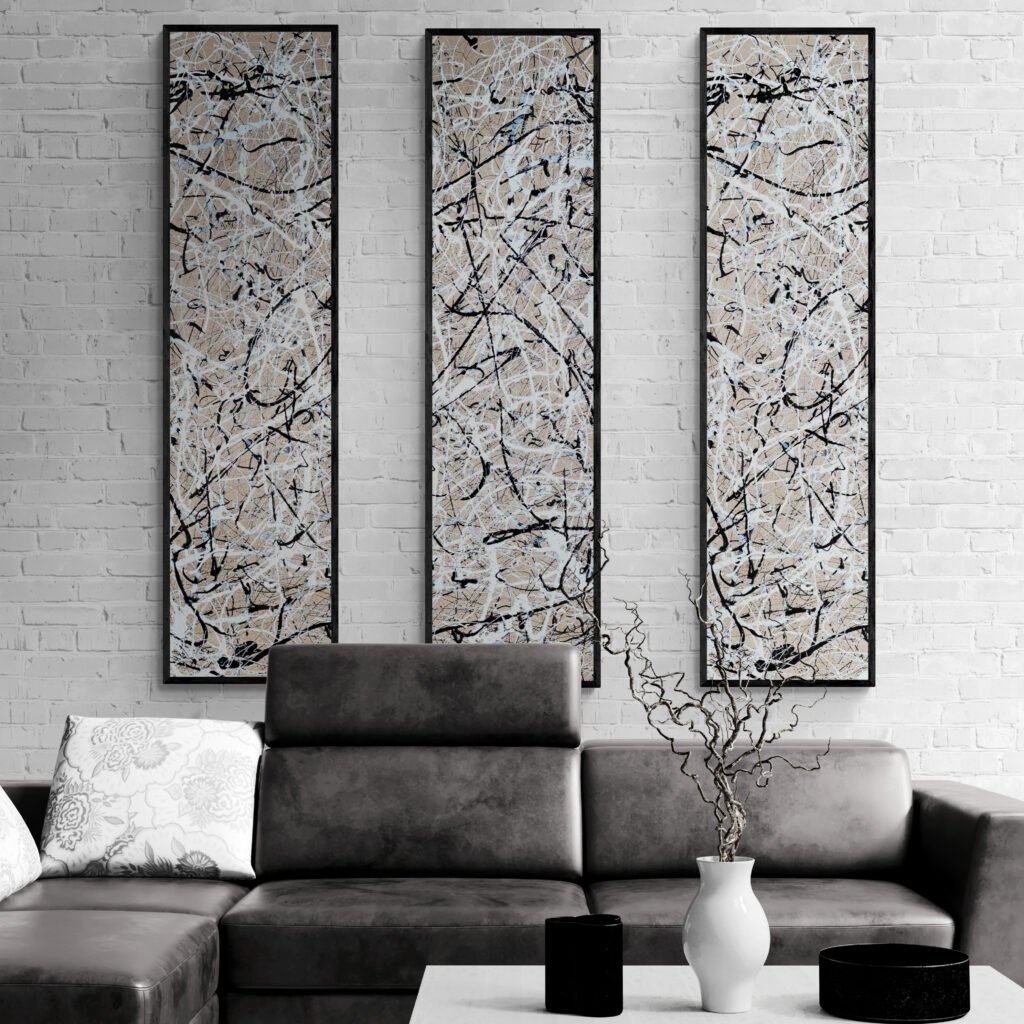
A triptych is an artwork divided into three separate panels that are designed to be displayed together as a single composition. The panels usually share a common visual language, palette and movement, and together they form one coherent piece.
Triptychs are especially popular in contemporary interiors because they introduce rhythm, structure and a more architectural presence on the wall.
The Power of a Single Large Painting
A single large painting creates a strong, calm and confident focal point. It feels simple, direct and often more minimal. In many modern interiors, one large piece can define the entire room.
Large formats such as 200 × 100 cm, 200 × 75 cm, 300 × 100 cm or 300 × 150 cm can work extremely well on big walls, especially in living rooms, entrances or representative spaces.
If you want a clean and powerful look with maximum impact and minimal visual noise, a single large painting is often the best choice.
When a Triptych Makes More Sense
A triptych can be a great solution when:
- The wall is very wide and a single piece would feel too concentrated
- You want to introduce rhythm and movement across the space
- The architecture of the room feels more structured or linear
- You want something dynamic but still cohesive
Triptychs often work beautifully above long sofas, in large corridors, or in open-plan spaces where the composition needs to stretch horizontally.
Visual Impact: Calm vs Rhythm
The main difference between these two options is the type of visual energy they bring:
- Single large painting: calm, strong, centered, minimal, iconic.
- Triptych: dynamic, rhythmic, architectural, flowing, structured.
Neither is better in absolute terms. It depends on whether you want the wall to feel more monumental and calm or more dynamic and expressive.
Proportions: The Total Width Still Matters
Whether you choose one piece or three, the total width of the composition should still respect the proportions of the wall and the furniture below it.
A good guideline is that the artwork (or group of artworks) should usually cover about two-thirds of the width of the sofa or sideboard underneath.
Spacing Between Panels in a Triptych
If you choose a triptych, the spacing between the panels is very important. The gap should be:
- Small enough to keep the composition visually connected
- Large enough to clearly separate the panels
In most cases, a gap of 3–6 cm works well, depending on the size of the panels and the scale of the wall.
What About Very Large or Complex Walls?
In some spaces, neither a standard single format nor a standard triptych fits perfectly. In those cases, a custom-sized artwork or custom multi-panel composition can solve proportion problems and make the result feel truly designed for the space.
If your wall is unusually large or architectural, you can explore large-scale and custom solutions in our Projects section.
Common Mistakes to Avoid
- Choosing a composition that is too small for the wall
- Using a triptych where a single strong piece would look more elegant
- Spacing the panels too far apart
- Ignoring the relationship between the artwork and the furniture
Final Thoughts
A single large painting and a triptych are both excellent solutions for large walls. The right choice depends on the architecture of the space and the type of visual presence you want: calm and monumental or dynamic and rhythmic.
If you’re unsure about proportions, you may also find these guides useful: