
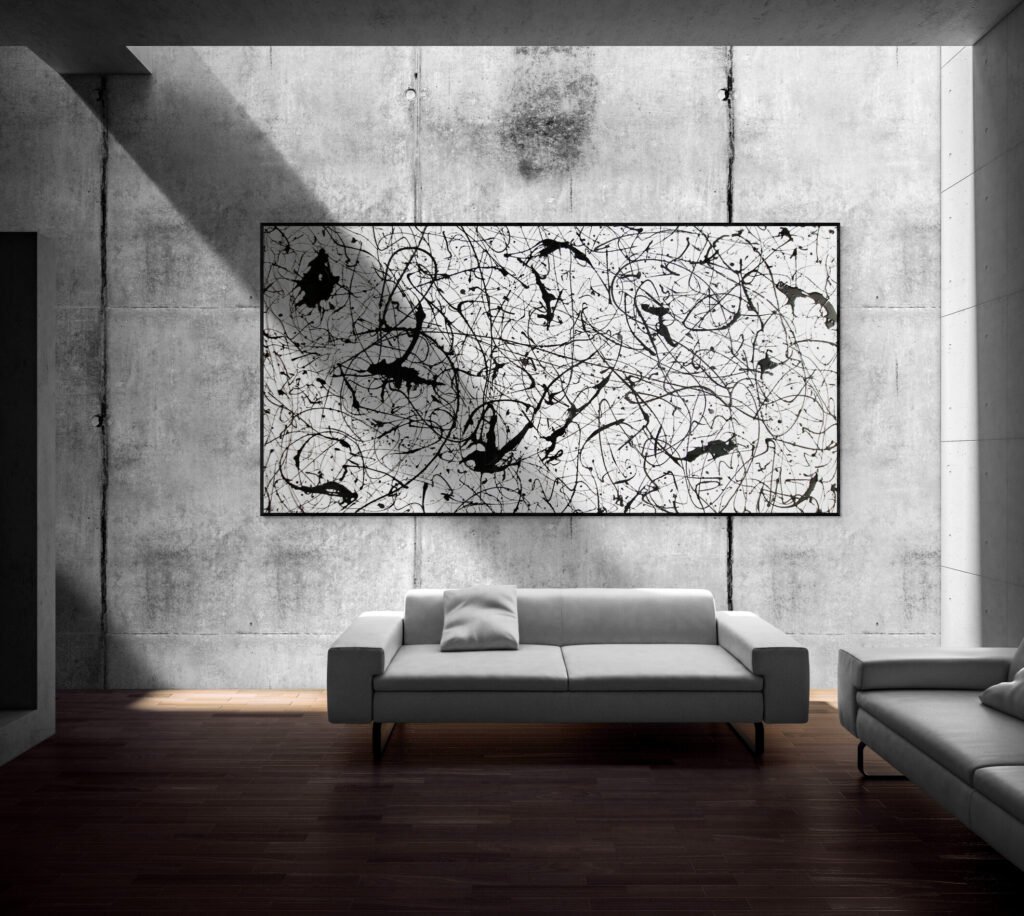
In many interiors, there is one wall or one space that naturally asks for something more. This is where statement art comes in: a strong, confident artwork that becomes the visual and emotional center of the room.
A statement piece is not just decoration. It is a decision. In this guide, we’ll explain what statement art is, when a space needs it, and how to choose the right focal piece.
What Is Statement Art?
Statement art is an artwork that immediately draws attention and defines the character of a space. A statement piece usually has a stronger visual presence and more impact than any other element in the room
It does not have to be loud or colorful. It simply has to be visually dominant and intentional.
When Does a Space Need a Focal Piece?
A statement artwork is especially effective when:
- The wall is large and feels empty or undefined
- The interior is architecturally strong but emotionally neutral
- You want one element to anchor the whole room
- The space feels correct but lacks identity
In these cases, one strong artwork often works better than several smaller decorative elements.
Scale Is the First Decision
The most common mistake with statement art is choosing something that is too small. A focal piece must have enough scale to compete with the architecture of the room.
Large formats such as 200 × 100 cm, 200 × 75 cm, 300 × 100 cm or 300 × 150 cm are often ideal for this role.
If you are unsure about proportions, these guides may help:
Calm or Powerful? Choosing the Right Energy
A statement piece does not have to be aggressive or loud. There are two main types:
- Calm statement: strong presence through scale, texture and simplicity.
- Expressive statement: strong presence through movement, color and energy.
The right choice depends on whether you want the room to feel monumental and calm or dynamic and expressive.
Single Piece or Multi-Panel Composition?
A statement can be:
- A single large painting
- A diptych or triptych
Both can work extremely well. If you are deciding between these options, this guide may help: Triptych vs Single Large Painting: What Works Better?.
Placement: Give It the Right Space
A statement piece needs space around it. It should not be squeezed between furniture or crowded by other decorations.
In most cases:
- Place it on the main wall of the room
- Let it be the primary visual reference
- Avoid competing elements nearby
For placement height, you can follow this guide: How High Should You Hang a Painting?.
When Custom Statement Art Makes Sense
Sometimes the wall or the architecture requires a very specific format or presence. In these cases, a custom statement piece can be the perfect solution.
A commissioned artwork allows you to define scale, mood and general direction while ensuring the piece fits the space perfectly. You can explore this option in our Projects section.
Common Mistakes to Avoid
- Choosing a piece that is too small to dominate the wall
- Trying to make several artworks share the role of focal point
- Placing the statement piece in a secondary or visually weak position
Final Considerations
Statement art is about confidence and clarity. One strong piece, chosen with the right scale and intention, can define the entire atmosphere of a space.
If you want to explore large-scale, series or custom statement artworks, you can visit our Projects section.