Starting an abstract art collection can feel both exciting and intimidating.
Unlike decorative purchases, collecting original art involves emotional, spatial and financial considerations that extend beyond immediate visual appeal. For many first-time buyers, uncertainty arises around where to begin, what to prioritize and how to evaluate artworks confidently.
Understanding the foundations of collecting helps transform the process from impulsive acquisition into a meaningful and rewarding long-term journey.
Understanding Why You Want to Collect
Every collection begins with intention.
Some collectors are drawn to abstract art for its emotional resonance — the way color, movement and texture create atmosphere within a space. Others view collecting as a way to support contemporary artists or build a cohesive visual identity across interiors.
Clarifying your motivation helps guide decisions around scale, investment level and acquisition frequency.
Common starting motivations include:
- Enhancing living spaces
- Building a personal art narrative
- Supporting living artists
- Exploring cultural investment
- Creating statement interiors
There is no single correct reason to begin collecting — only the one that resonates personally.
Learning the Language of Abstract Art
Before acquiring multiple works, it helps to understand the visual language of abstraction.
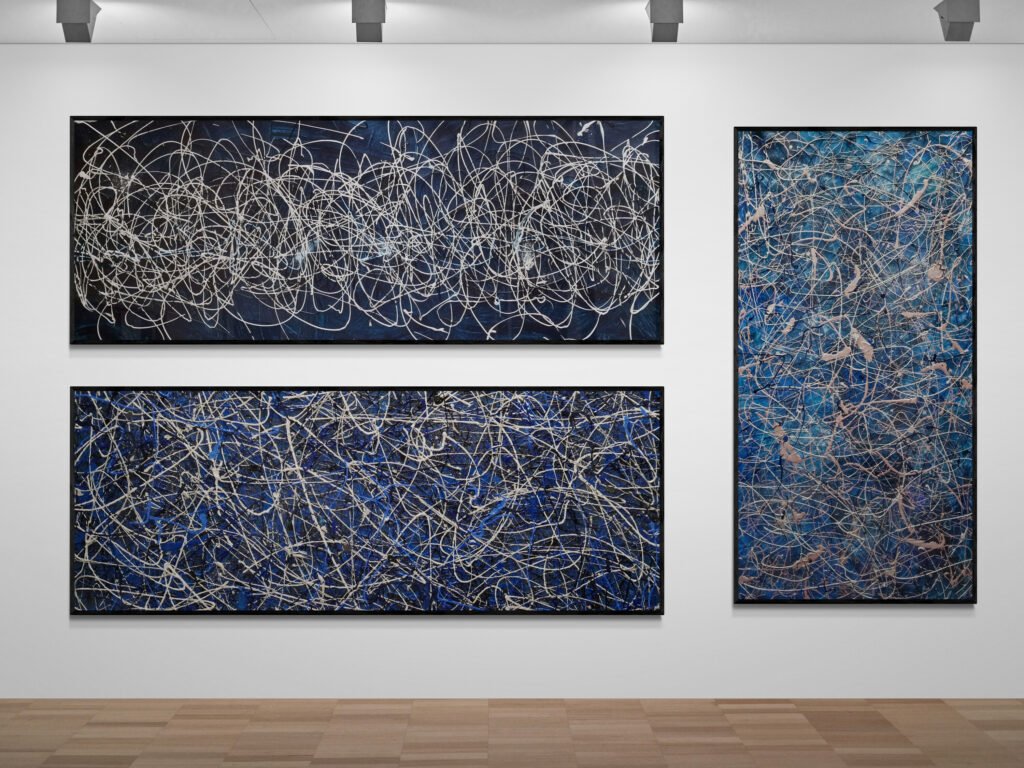
Elements such as gesture, density, palette restraint and material layering influence how a painting feels within a space.
Familiarity grows through exposure — viewing different works, exploring stylistic approaches and observing how abstract paintings interact with interiors.
Developing this visual literacy allows collectors to move beyond surface attraction toward more informed selections.
Starting With Original Works
While prints offer accessibility, many collectors choose to begin with original paintings to establish authenticity within their collection.
Original abstract artworks provide:
- Material presence
- Surface texture
- Gestural individuality
- Exclusive ownership
Even smaller-scale originals can anchor a collection, creating a foundation from which future acquisitions evolve.
Setting a Budget Framework
Budget planning helps structure collecting sustainably.
Original abstract art spans a wide range of price points influenced by size, material density and production complexity.
Rather than focusing solely on price, collectors often consider:
- Spatial impact
- Emotional resonance
- Artist connection
- Long-term value
Starting with accessible formats allows collectors to engage with original work while building confidence in their acquisition decisions.
Choosing the Right Scale
Scale plays a significant role in how abstract art functions within a collection.
Smaller works may suit intimate spaces or gallery-style arrangements, while larger paintings operate as architectural focal points.
When starting a collection, balancing formats can create visual rhythm across environments.
Collectors often begin with a statement piece or a foundational work that defines the collection’s aesthetic direction.
Buying Directly From Artists
Acquiring artworks directly from contemporary artists offers several advantages:
- Transparent provenance
- Direct communication
- Access to commissions
- Insight into process
Direct acquisition also fosters relational collecting — where collectors engage with the artist’s evolving practice over time.
This connection adds narrative depth to the collection beyond the artwork itself.
Exploring Limited Series and Cohesive Bodies of Work
Limited series provide an accessible entry point for collectors seeking continuity across their collection.
Hand-painted editions maintain originality while offering structured pricing frameworks.
Collecting within a series can create spatial cohesion — particularly in large interiors or multi-room environments.
Authenticity and Documentation
Every original acquisition should include a signed Certificate of Authenticity.
This documentation confirms:
- Artist attribution
- Medium and format
- Series identification
- Creation authenticity
Certificates become part of the artwork’s long-term provenance, especially relevant for international collectors.
Thinking Long-Term
Art collecting evolves over time.
Early acquisitions often reflect instinctive attraction, while later decisions become more refined as collectors develop stylistic awareness and artist relationships.
Rather than seeking immediate completion, collections grow organically — shaped by exposure, travel, interior changes and personal evolution.
Displaying and Living With Art
Collecting does not end at acquisition.
How artworks are displayed influences how they are experienced daily.
Collectors often experiment with:
- Orientation
- Placement height
- Lighting
- Grouping arrangements
Abstract art, in particular, invites flexible presentation — adapting to architectural contexts and evolving spatial narratives.
Building a Cohesive Collection
As collections expand, coherence becomes important.
Some collectors focus on a single artist’s evolving practice. Others combine multiple abstract voices unified by palette, movement or scale.
There is no rigid formula — only the desire to create visual continuity across spaces.
Final Considerations
Starting an abstract art collection is less about ownership and more about relationship — with artists, spaces and personal perception.
Each acquisition reflects a moment of connection between viewer and artwork, building a visual narrative that evolves over time.
For first-time collectors, beginning with intention, curiosity and openness allows the journey to unfold naturally — transforming spaces through meaningful artistic presence.