
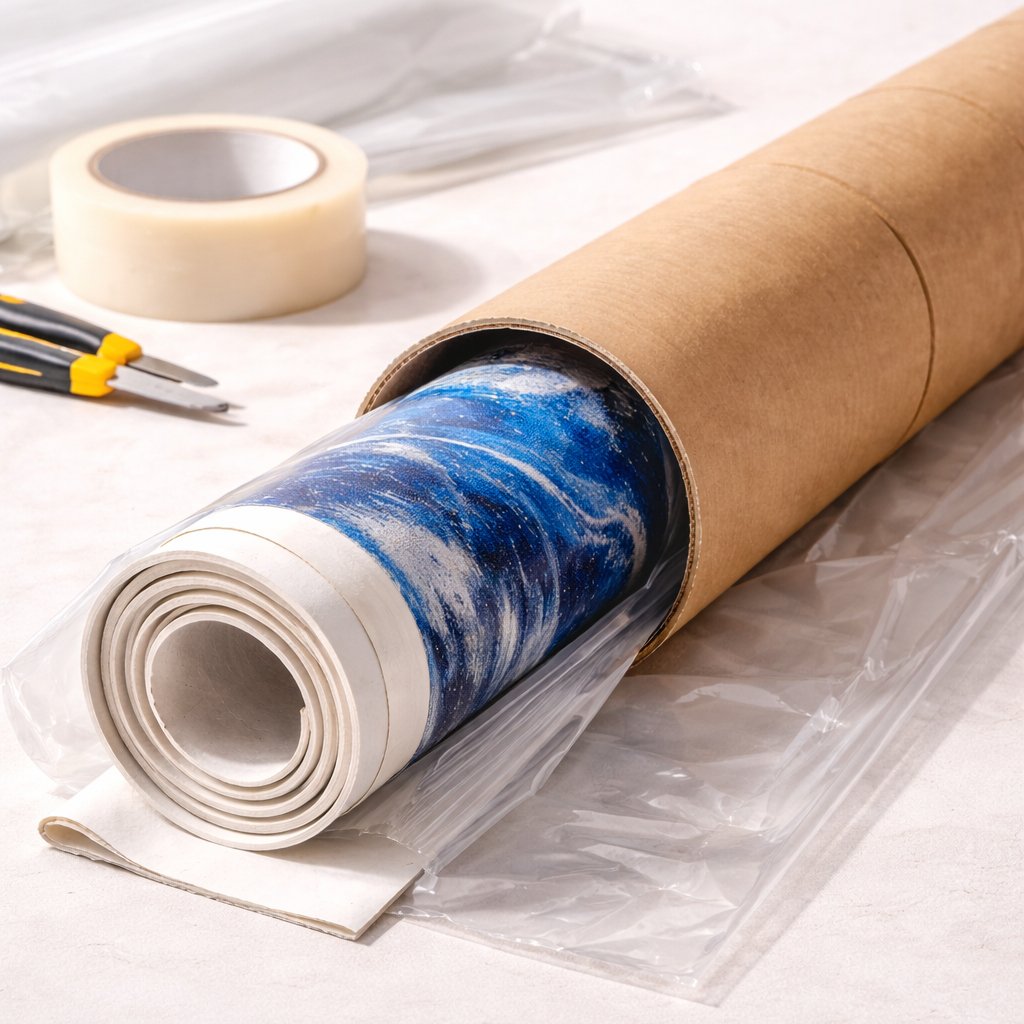
If you are buying a large painting online or from another country, it is completely normal to wonder whether art shipped rolled is really safe. After all, you are investing in an original artwork, and you want to be sure it arrives in perfect condition.
The short answer is: yes, it is very safe—when done properly. In this guide, we’ll explain why this method is widely used, how the artwork is protected, and what happens after it arrives.
Why Rolling a Canvas Is a Professional Standard
Shipping artworks rolled in protective tubes is a standard practice used by artists, galleries and collectors all over the world, especially for medium and large formats.
This method is preferred because:
- It reduces the risk of impact damage
- It protects the entire surface evenly
- It avoids problems with frames and corners
- It simplifies international logistics
How the Artwork Is Protected During Shipping
A professionally shipped rolled painting is:
- Rolled with the painted surface facing outward
- Wrapped in protective materials
- Placed inside a rigid, impact-resistant tube
This creates a stable and secure environment for the artwork during transport.
Will Rolling Damage the Paint or Surface?
When high-quality materials and correct techniques are used, no. Professional canvases and paints are designed to handle rolling and later stretching without cracking or flaking.
The key factors are:
- Correct rolling direction
- Proper diameter of the roll
- Sufficient drying and curing time before shipping
What Happens When the Painting Arrives?
Once you receive the artwork, it is taken to a local professional framer or canvas stretcher, who will:
- Unroll the canvas carefully
- Stretch it onto a wooden frame
- Prepare it for hanging
We explain this step-by-step in this guide: How to Stretch a Canvas After Buying a Rolled Painting.
Why This Method Is Often Safer Than Shipping Stretched
Large stretched paintings are exposed to:
- Corner impacts
- Frame damage
- Punctures and surface pressure
A rolled canvas inside a rigid tube simply avoids most of these risks.
What About Very Large or Expensive Artworks?
In fact, the larger and more valuable the artwork is, the more common it is to ship it rolled. This is the method used for many museum-level works, exhibitions and international art fairs.
It allows:
- Safer transport
- Lower insurance risk
- More predictable delivery conditions
Common Concerns (and the Truth)
- “It will arrive damaged” — Extremely unlikely with professional packaging.
- “The paint will crack” — Not with proper materials and technique.
- “It won’t look the same after stretching” — It will look exactly as intended.
Final Thoughts
Buying art shipped rolled is not risky—it is a proven, professional and widely trusted method used all over the world. It is often safer than shipping large artworks already stretched and framed.
If you are considering a large or custom artwork, you can explore how shipping and logistics are handled in our Projects section.
You may also find this guide useful: Why Large Paintings Are Shipped Rolled (and Why It’s Better).