
When exploring abstract art for your home or collection, one of the first decisions you’ll encounter is choosing between original art vs prints.
At first glance, both may appear visually similar — especially online. But beyond the image itself, original abstract artworks and prints differ fundamentally in presence, materiality, value and long-term significance.
Understanding these differences allows collectors to make informed decisions aligned with their expectations, space and relationship with art.
What Defines an Original Abstract Artwork?
An original abstract painting is a one-of-a-kind physical object created directly by the artist.
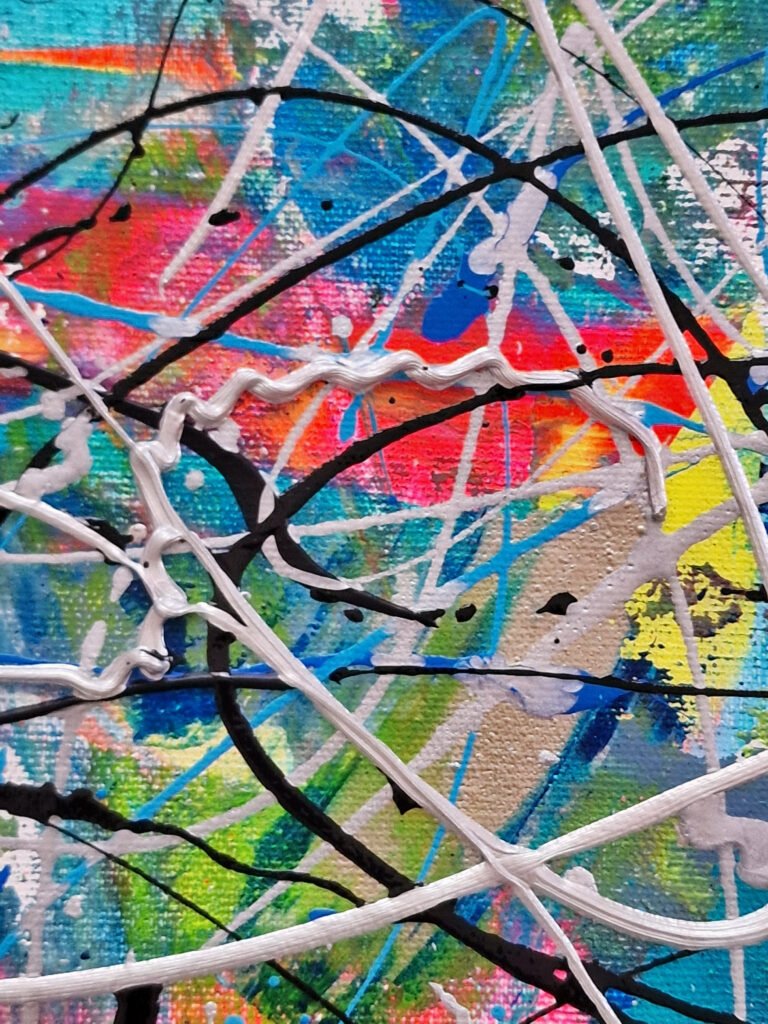
It is not a reproduction or mechanical transfer of an image, but the result of a physical process involving gesture, material layering and compositional development over time.
Original works carry:
- Physical paint build-up
- Surface texture and relief
- Layered pigments
- Material density variations
- Edge detailing and depth
Each mark records a moment within the creative process — gestures that cannot be identically repeated.
Even in limited hand-painted series, every piece remains materially unique due to the unpredictable interaction between movement, gravity and paint behavior.
What Is an Art Print?
A print is a reproduction of an original artwork, transferred onto paper or canvas using digital or mechanical printing processes.
Prints can range from open editions (unlimited copies) to limited edition reproductions signed and numbered by the artist.
While prints can faithfully reproduce color and composition, they lack the physical characteristics of original works:
- No paint layering
- No surface relief
- No material density
- No gestural depth
They replicate the image — not the object.
Material Presence vs Image Reproduction
One of the most significant differences between originals and prints is material presence.
Original abstract paintings interact with light through texture, gloss variations and pigment density. As viewers move around the work, reflections and tonal shifts become visible.
Prints, by contrast, remain visually static.
Even high-quality canvas prints cannot replicate:
- Metallic reflections
- Iridescent pigments
- Thick paint layering
- Surface irregularities
These tactile and optical effects are integral to contemporary abstract expressionism.
Emotional and Spatial Impact
Original paintings occupy space differently than prints.
Because they possess physical depth, they create subtle shadows and surface movement that affect how the artwork integrates with architecture.
In large interiors, this presence becomes particularly significant. A textured painting can anchor a space, adding rhythm and visual weight that flat prints cannot achieve.
Collectors often describe original abstract art as something that feels “alive” within the room — evolving with lighting and viewing angles.
Exclusivity and Ownership
Original abstract artworks are inherently exclusive.
Whether fully unique or part of a limited hand-painted series, they exist in finite form. Ownership implies collecting an unrepeatable piece of artistic production.
Prints, even in limited editions, remain reproducible by nature. Their value lies more in accessibility than exclusivity.
For collectors seeking singular works tied directly to an artist’s hand, originals offer a level of connection prints cannot replicate.
Certification and Authenticity
Original artworks are typically accompanied by a signed Certificate of Authenticity, documenting:
- Artist attribution
- Creation medium
- Format and size
- Date or series identification
This documentation establishes provenance and reinforces long-term collectibility.
Prints may also include certificates, but these authenticate the edition — not the physical act of creation.
Investment and Long-Term Value
While not all art purchases are investment-driven, value retention differs between originals and prints.
Original abstract paintings hold intrinsic value through:
- Material originality
- Artist production time
- Scale and complexity
- Series rarity
As an artist’s career develops, original works may appreciate in cultural and financial value.
Prints, by contrast, are generally positioned as decorative acquisitions rather than collectible assets.
Cost Accessibility
One of the primary reasons collectors consider prints is affordability.
Prints allow access to an artist’s imagery at a lower price point, making them suitable for:
- Entry-level buyers
- Temporary installations
- Secondary spaces
Original artworks require a higher financial commitment due to their physical uniqueness, scale and production labor.
However, many studios offer a range of formats and sizes, allowing collectors to access original work across different budget levels.
When Prints May Be the Right Choice
Prints can be appropriate when:
- Budget is limited
- The goal is decorative rather than collectible
- Temporary staging is needed
- Large quantities are required
They serve a valid function within interior styling and accessible art ownership.
When Originals Become Essential
Original abstract art becomes particularly relevant when:
- The artwork is intended as a focal point
- Collectors value exclusivity
- Texture and materiality matter
- Long-term ownership is considered
- The piece anchors architectural space
In these contexts, the physical presence of an original painting cannot be substituted.
A Hybrid Contemporary Model
Some contemporary studios bridge the gap by offering limited hand-painted series.
These are not prints, but original works created within a defined conceptual framework — sharing scale or palette while remaining materially distinct.
This model allows collectors to access original art with structured pricing while maintaining authenticity.
Final Thoughts
Choosing between original abstract art and prints ultimately depends on the collector’s intention.
If the goal is accessibility and visual reference, prints offer a practical solution.
If the objective is to acquire a physical, unrepeatable artwork shaped by gesture, material and artistic process, original paintings provide a far deeper level of engagement.
Understanding this distinction transforms the act of buying art into a more conscious and meaningful decision.