Contemporary abstract art encompasses a wide spectrum of visual languages, each shaped by different intentions, processes and spatial relationships.
While all abstract art moves beyond representation, not all abstraction communicates the same emotional or architectural effect. Some works emphasize restraint and silence, others movement and intensity, while certain approaches explore structure and order.
Understanding these stylistic differences helps collectors choose artworks that resonate not only visually, but atmospherically within a space.
Why Style Matters in Abstract Art
In figurative art, subject matter often guides selection. In abstract art, style becomes the primary emotional and spatial driver.
The way paint moves, settles, interacts and occupies the canvas influences how the artwork feels within an environment.
A gestural painting may energize a room, while a minimal composition can create calm. A geometric structure may reinforce architectural rhythm.
Recognizing these stylistic distinctions allows collectors to align artwork with interior identity rather than treating abstract art as interchangeable decoration.
Minimal Abstract Art
Minimal abstract art focuses on reduction.
Rather than layering multiple colors or gestures, minimal works rely on restraint — limiting palette, movement and compositional elements to create quiet visual presence.
Characteristics often include:
- Limited color range
- Controlled surface movement
- Open spatial breathing areas
- Subtle tonal transitions
In some cases, minimal works may appear monochromatic. Yet beneath this simplicity lies surface complexity — layers of pigment, texture variations and material nuance.
Spatial Impact
Minimal abstraction works particularly well in:
- Contemporary interiors
- Architectural spaces
- Neutral environments
- Design-led residences
Rather than dominating a room, minimal works integrate into its rhythm, reinforcing calm and balance.
Expressive Abstract Art
Expressive abstraction sits at the opposite end of the spectrum.
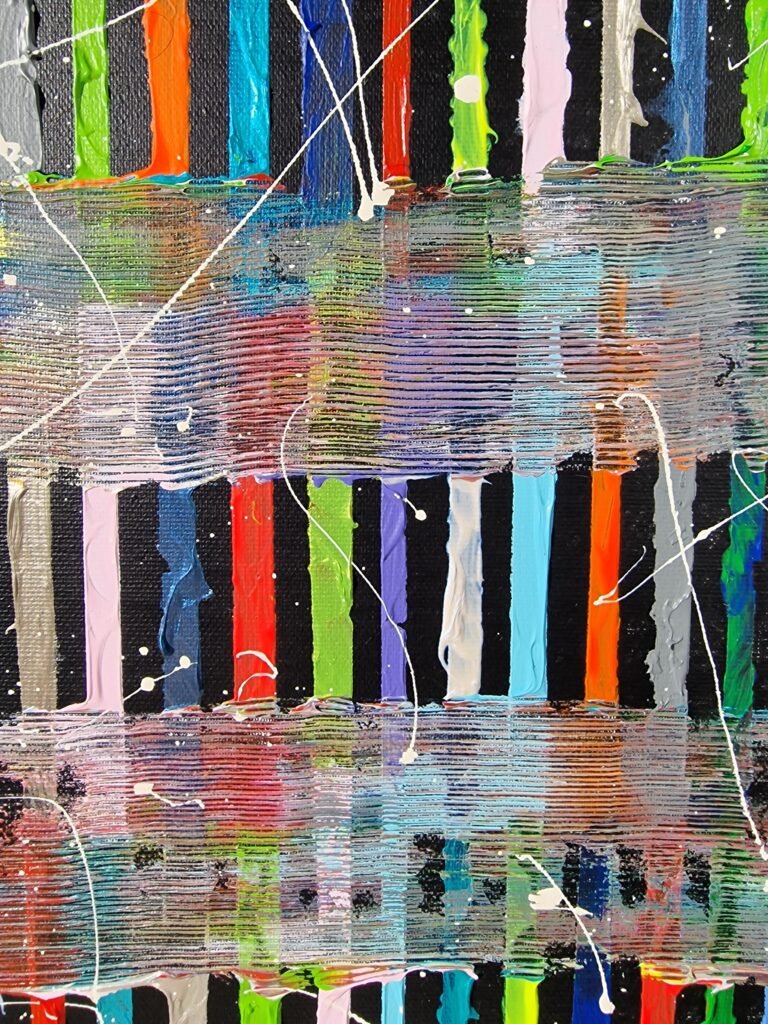
Rooted in abstract expressionism and action painting, this style prioritizes movement, gesture and emotional intensity.
Paint is applied through physical engagement — drips, splashes, pours and gestural interventions that record the artist’s motion and material interaction.
Common characteristics include:
- Dynamic movement
- Layered paint density
- High surface texture
- Energetic color interplay
The composition evolves through the dialogue between control and unpredictability — where gravity, speed and material behavior influence the final image.
Spatial Impact
Expressive abstract art is often chosen for:
- Statement walls
- Large interiors
- Double-height spaces
- Contemporary luxury environments
These works introduce rhythm, depth and kinetic energy, transforming static architecture into emotionally charged environments.
Geometric Abstract Art
Geometric abstraction explores structure rather than gesture.
Instead of spontaneous movement, compositions are built through:
- Lines
- Grids
- Polygons
- Repeating forms
Color relationships and spatial alignment replace gestural expression as the primary visual language.
This style often reflects architectural logic, where precision and proportion drive the composition.
Spatial Impact
Geometric abstract art integrates well within:
- Modernist interiors
- Corporate environments
- Structured architectural spaces
- Design-focused offices
It reinforces order, clarity and spatial symmetry.
Hybrid and Contemporary Crossovers
While these categories help define stylistic directions, contemporary abstract artists often move fluidly between approaches.
A single practice may combine:
- Expressive gesture with minimal palettes
- Textural density within restrained compositions
- Structured balance within gestural movement
These hybrid approaches reflect contemporary abstraction’s evolution beyond rigid stylistic boundaries.
Collectors increasingly seek works that balance energy and restraint — combining emotional depth with spatial sophistication.
Choosing the Right Style for Your Space
Selecting an abstract style is less about art history and more about spatial resonance.
Key considerations include:
- Room scale
- Lighting conditions
- Architectural rhythm
- Furniture density
- Emotional atmosphere desired
For example:
- Minimal works enhance calm, open interiors
- Expressive works energize focal walls
- Geometric works reinforce structural design
Rather than competing with architecture, the artwork should extend it.
Emotional Connection and Personal Response
Beyond spatial logic, personal response remains essential.
Abstract art invites subjective interpretation. Collectors often gravitate instinctively toward styles that reflect their emotional or psychological preferences.
Some are drawn to intensity and movement. Others to stillness and reduction.
Understanding stylistic categories provides orientation — but the final decision remains deeply personal.
Style as an Extension of Artistic Identity
Each abstract artist develops a signature approach shaped by process, material and conceptual focus.
Some studios concentrate on gestural expression and surface density. Others explore chromatic restraint or structural repetition.
Recognizing these stylistic identities helps collectors understand not only the artwork, but the philosophy behind its creation.
Closing Perspective
Abstract art styles are not hierarchical — they are experiential.
Minimal, expressive and geometric approaches each offer distinct spatial and emotional contributions.
By understanding how these styles behave within interiors, collectors can select works that resonate not only visually, but atmospherically — enhancing the environments they inhabit through presence, movement and balance.