
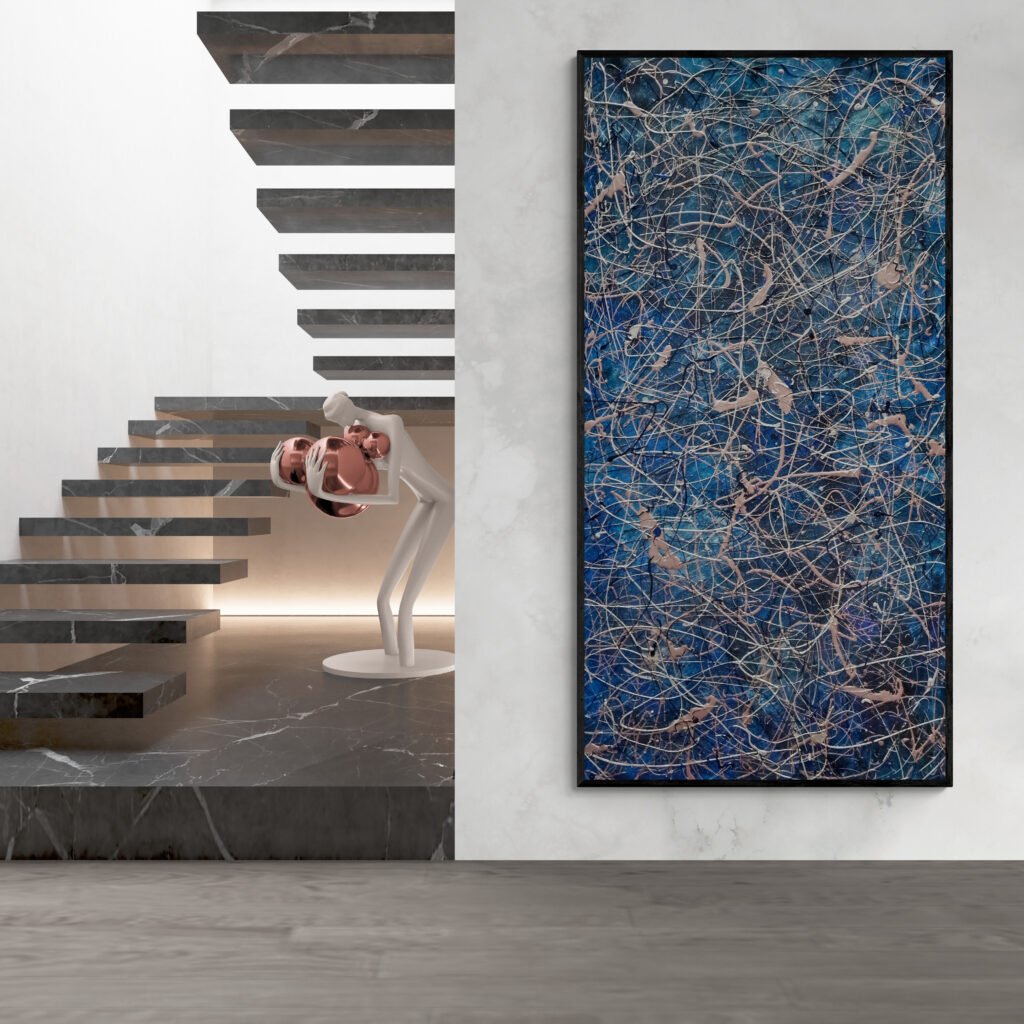
Modern interiors are defined by clean lines, open spaces and carefully chosen elements. In this context, abstract art plays a key role: it brings emotion, movement and personality into spaces that are often intentionally restrained and architectural.
In this guide, you’ll find practical ideas and tips to use abstract art in modern interiors in a confident and intentional way.
Why Abstract Art Works So Well in Modern Spaces
Modern interiors often rely on simplicity, neutral palettes and strong architectural forms. Abstract art works beautifully in this context because it introduces:
- Visual energy and movement
- Color and emotional presence
- Contrast with clean architectural lines
- A human, expressive layer
Instead of competing with the architecture, a strong abstract artwork usually completes the space.
Think in Terms of Scale, Not Decoration
One of the most common mistakes in modern interiors is choosing art that is too small or too timid. Large, confident spaces usually need generous formats.
If you are unsure about proportions, these guides may help:
In many cases, one strong statement piece works better than several small decorative elements.
Color: Subtle Integration or Bold Contrast
In modern interiors, you can use abstract art in two main ways:
- Subtle integration: choosing a piece that echoes the existing palette of the space.
- Bold contrast: using the artwork as a focal point that deliberately stands out.
Both approaches are valid. The right choice depends on whether the interior is meant to feel calm and continuous or expressive and dynamic.
Texture and Materiality as a Design Tool
Many modern interiors use smooth, refined surfaces: stone, glass, wood, polished concrete. A textured abstract painting can introduce depth, warmth and physical presence that softens the space.
Even in monochrome or neutral compositions, texture can make the artwork feel rich and complex.
Single Statement Piece or Multi-Piece Composition?
Depending on the architecture of the space, you can choose:
- A single large statement artwork that anchors the room
- A diptych or triptych that creates rhythm and movement
If you are deciding between these options, this guide may help: Triptych vs Single Large Painting: What Works Better?.
Placement: Keep the Artwork Connected to the Space
In modern interiors, artwork should feel integrated into the architecture, not floating randomly on the wall.
As a general rule:
- Above furniture, keep the artwork 15–25 cm from the top of the piece below.
- On empty walls, aim for the center of the artwork at eye level.
For more details, you may find this guide useful: How High Should You Hang a Painting?.
When Custom Art Makes Sense
Modern architecture often comes with unusual proportions, large walls or very specific spatial rhythms. In these cases, a custom-sized or custom-composed artwork can make the difference between something that merely fits and something that feels designed for the space.
If you are working with a large or architectural interior, you can explore custom and large-scale solutions in our Projects section.
Common Mistakes to Avoid
- Choosing art that is too small for the scale of the space
- Treating art as a decorative accessory instead of a structural element
- Ignoring texture and material presence
- Hanging artwork too high or disconnected from the furniture
Final Thoughts
In modern interiors, abstract art should not be an afterthought. The right piece can define the atmosphere of the entire space, bring warmth to minimalist architecture and create a strong sense of identity.
If you want to explore statement pieces, series or custom artworks for modern spaces, you can visit our Projects section.