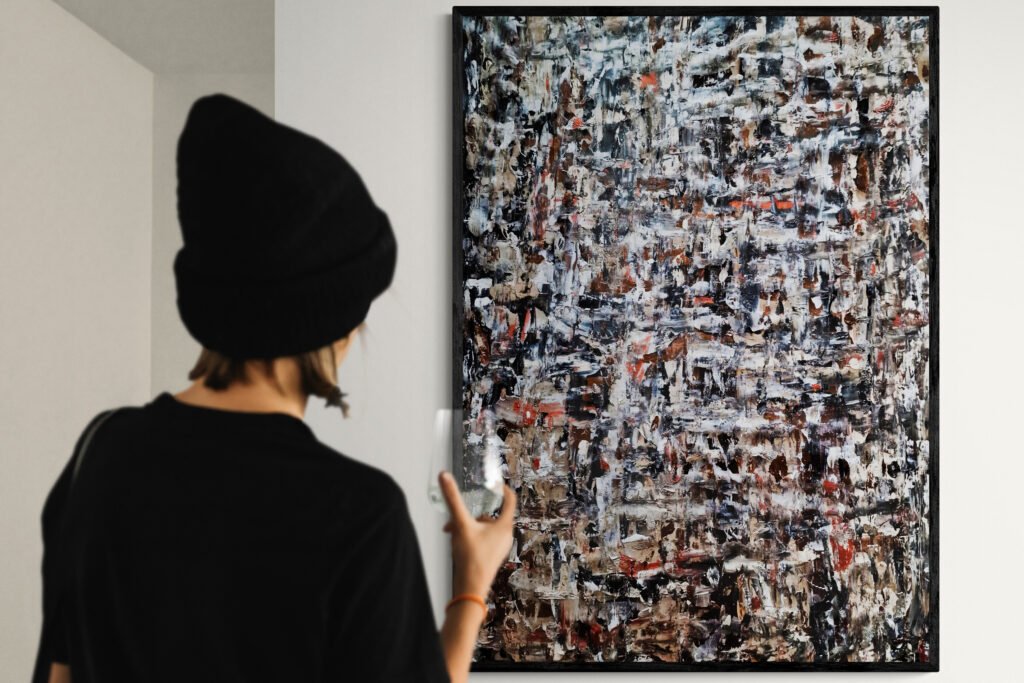
For collectors and interior designers seeking artworks that align precisely with a space, commissioned abstract art offers a compelling alternative to acquiring existing pieces.
Rather than selecting from completed works, commissioning allows collectors to collaborate directly with the artist — shaping scale, palette and spatial dialogue from the outset.
However, commissioning is not simply a purchase. It is a creative partnership that requires clarity, trust and shared vision.
Understanding whether commissioned abstract art is the right path depends on expectations, timelines and the role the artwork will play within the environment.
What Is Commissioned Abstract Art?
A commissioned artwork is created specifically for a collector, project or architectural setting.
Instead of adapting a finished piece, the artist develops a new composition informed by:
- Spatial dimensions
- Interior palette
- Lighting conditions
- Architectural rhythm
- Emotional atmosphere desired
The result is an artwork conceived in direct dialogue with its final environment.
Why Collectors Choose Commissioned Work
There are several reasons collectors pursue custom abstract projects rather than acquiring existing paintings.
Spatial Precision
Large walls, double-height interiors or panoramic layouts often require scale formats not readily available.
Commissioning ensures proportional balance between artwork and architecture.
Palette Alignment
While abstract art thrives on interpretive freedom, color integration remains important within designed spaces.
Commissioned works can respond to:
- Interior materials
- Furniture tones
- Lighting warmth
- Architectural finishes
This alignment enhances cohesion without reducing artistic authenticity.
Conceptual Continuity
Collectors developing multi-room or hospitality projects may seek cohesive series rather than isolated artworks.
Commissions allow artists to create structured bodies of work unified through palette, gesture or scale.
The Collaborative Process
Commissioning abstract art involves structured dialogue between collector and artist.
The process typically unfolds through stages:
- Spatial consultation
- Format definition
- Palette discussion
- Material direction
- Production timeline
- Completion review
While collectors provide contextual input, the artist retains creative authorship — ensuring the final work remains authentic rather than prescriptive.
Balancing Guidance and Artistic Freedom
Successful commissions depend on balance.
Collectors share spatial needs and preferences, but excessive direction can restrict the spontaneity essential to abstract expression.
Trusting the artist’s process allows the work to evolve organically while still aligning with the project’s conceptual framework.
Unique vs Series-Based Commissions
Commissioned works may take different forms.
One-of-a-Kind Projects
Fully unique paintings developed for a specific space, often at statement scale.
Cohesive Series
Multiple works designed to function collectively — common in hospitality, corporate or large residential interiors.
Each piece remains original while contributing to a unified visual language.
Timeline Expectations
Custom abstract artworks require production time.
Factors influencing timelines include:
- Scale
- Material layering
- Drying intervals
- Studio scheduling
Large or texturally dense works may require extended development periods compared to smaller formats.
Understanding this timeline ensures alignment between project planning and artwork completion.
Material and Surface Considerations
Commissioned works maintain the same material integrity as studio originals.
Artists may incorporate:
- Layered pigments
- Industrial enamels
- Metallic finishes
- Textural density
Surface presence remains central, ensuring the commissioned piece carries the same physical authenticity as any independent work.
Logistics and Delivery
For international collectors, commissioned artworks are often shipped rolled in protective tubes.
This approach:
- Protects the surface during transit
- Reduces shipping costs
- Allows local stretching or framing
Large-scale commissions particularly benefit from this logistics model.
Certification and Documentation
As with all original artworks, commissioned pieces are accompanied by signed Certificates of Authenticity.
Documentation confirms:
- Artist authorship
- Original creation
- Project context
- Format and medium
This reinforces both provenance and long-term collectibility.
When Commissioning May Not Be Necessary
While commissions offer precision, they are not always required.
Collectors may prefer existing works when:
- Immediate acquisition is needed
- A spontaneous emotional connection occurs
- Budget constraints limit custom production
Both acquisition paths hold equal artistic legitimacy.
Evaluating If Commissioning Is Right for You
Commissioned abstract art is particularly suited for collectors who:
- Are designing new interiors
- Require specific dimensions
- Seek cohesive multi-work installations
- Value artist collaboration
- Prioritize exclusivity
For these collectors, commissioning transforms art acquisition into spatial creation.
Commissioning as Creative Partnership
Beyond the final artwork, commissioning fosters a direct relationship between collector and artist.
Dialogue, trust and shared vision shape the outcome — producing works that exist not only as objects, but as integrated architectural elements.
Final Reflection
Commissioned abstract art offers a deeply personalized approach to collecting — one that aligns artistic expression with spatial identity.
For collectors seeking precision, exclusivity and collaborative creation, commissioning becomes more than acquisition — it becomes part of the creative process itself.