For many collectors entering the contemporary art world, one question emerges early in the journey: is abstract art a good investment?
The answer depends largely on how investment is defined.
While some acquisitions may appreciate financially over time, the value of abstract art extends beyond resale metrics. Original paintings carry cultural, spatial and emotional significance that cannot be measured solely through market performance.
Understanding both the tangible and intangible dimensions of artistic value helps collectors approach investment with clarity and balance.
Financial Investment vs Cultural Investment
In traditional financial terms, investment implies measurable return — appreciation, liquidity and resale demand.
Art operates differently.
While certain artists and movements gain market traction, contemporary abstract art often generates value through slower, less predictable trajectories tied to:
- Career development
- Exhibition history
- Collector base growth
- Institutional recognition
For this reason, abstract art is frequently considered a hybrid investment — cultural first, financial second.
Why Collectors Invest in Abstract Art
Despite market variability, collectors continue to invest in abstract art for several reasons.
1. Originality and Scarcity
Original abstract paintings exist as singular physical objects. Even limited series remain materially unique due to hand-painted processes.
Scarcity supports long-term collectibility.
2. Artist Development
As artists mature, their early works often gain historical relevance within their evolving practice.
Collectors acquiring work during formative studio phases may benefit from this progression.
3. Global Market Accessibility
Contemporary abstract art operates within an international collector network.
Online platforms, galleries and private studios allow works to circulate globally, expanding potential demand over time.
The Role of Material Presence
Material complexity contributes to investment perception.
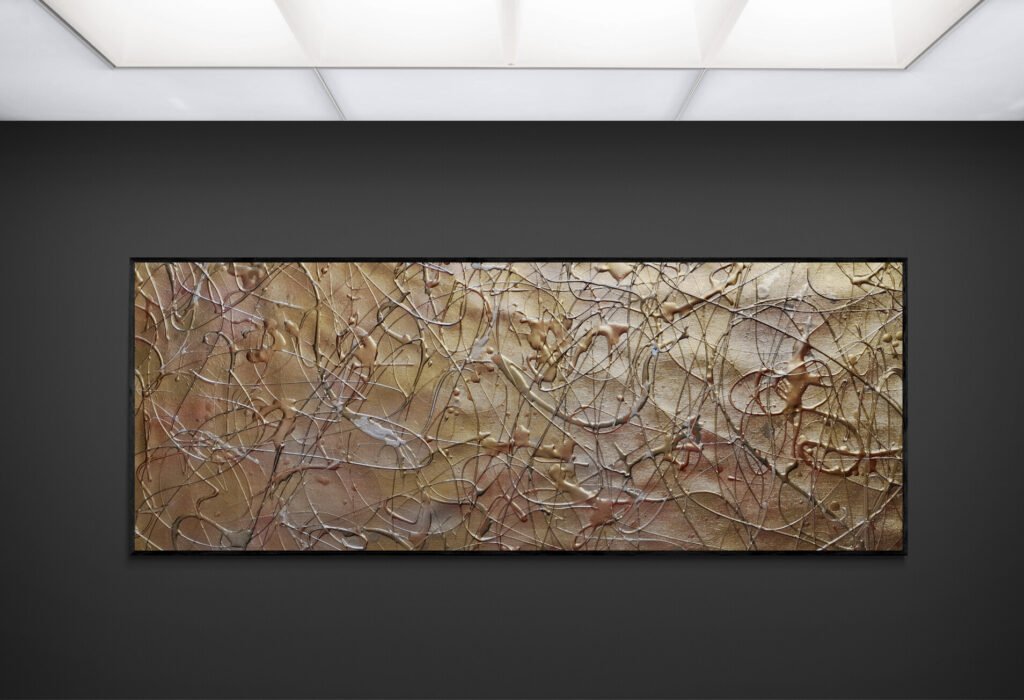
Textured surfaces, layered pigments and experimental materials create physical artworks that cannot be digitally replicated.
This object-based uniqueness strengthens long-term cultural value, even when financial trajectories fluctuate.
Scale and Architectural Relevance
Large-scale abstract paintings often function as architectural anchors.
Because they are conceived for spatial transformation rather than decorative supplementation, their relevance persists even as interior trends evolve.
Collectors investing in statement-scale works often do so with permanence in mind.
Market Volatility and Realistic Expectations
It is important to approach art investment with realistic expectations.
Unlike stocks or real estate, art markets are less liquid and more influenced by subjective perception.
Factors affecting resale value include:
- Artist recognition
- Gallery representation
- Exhibition exposure
- Secondary market demand
For emerging and mid-career artists, appreciation is possible — but never guaranteed.
Emotional Return on Investment
One of the most overlooked dimensions of art investment is experiential return.
Collectors live with artworks daily. The visual, emotional and spatial impact of an original painting generates ongoing value independent of market performance.
In this sense, abstract art provides dual return:
- Cultural and emotional enrichment
- Potential long-term financial appreciation
Investing in Living Artists
Supporting contemporary artists represents a form of cultural patronage.
Acquiring works directly from active studios contributes to artistic sustainability while allowing collectors to engage with evolving practices.
This relational investment often becomes more meaningful than speculative acquisition
Limited Series and Structured Investment Entry
Limited hand-painted series offer structured access to original work while maintaining exclusivity.
Because production is finite, these works balance accessibility with scarcity — appealing to collectors entering the investment space.
Documentation and Provenance
Investment-minded collectors should prioritize works accompanied by:
- Signed Certificates of Authenticity
- Studio documentation
- Series identification
- Acquisition records
These elements strengthen long-term provenance and resale credibility.
Diversifying an Art Collection
As collections expand, diversification becomes relevant.
Collectors may combine:
- One-of-a-kind originals
- Limited series
- Different scales
- Multiple artists
This approach balances aesthetic cohesion with investment distribution.
Beyond Speculation
While financial appreciation remains possible, acquiring abstract art purely for speculative gain can disconnect collectors from the experiential essence of art ownership.
The most resilient collections are built through personal resonance first — market value second.
Investment Perspective
Abstract art can function as an investment — but its true strength lies in multidimensional value.
Originality, material presence, scarcity and artistic evolution all contribute to long-term significance, whether cultural, emotional or financial.
For collectors, approaching acquisition with both passion and awareness creates the most sustainable and rewarding investment trajectory.