
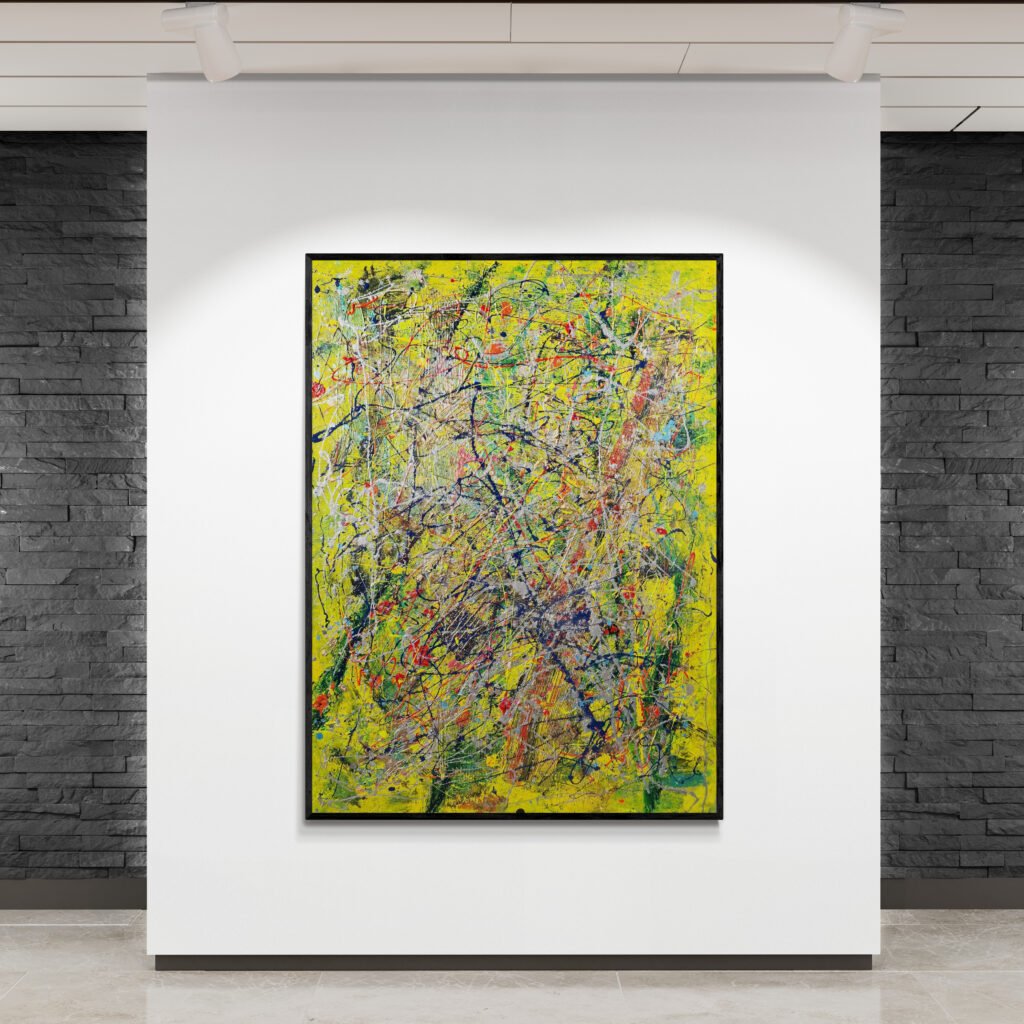
Recognizing high-quality abstract art can feel challenging, especially for first-time buyers.
Unlike figurative work — where technical accuracy can be measured through anatomy or perspective — abstract painting operates through material presence, composition, energy and surface complexity.
Quality in abstract art is not about what is represented, but how the artwork exists as an object: how it is built, how it behaves visually and how it sustains long-term engagement within a space.
Understanding these elements allows collectors to make confident, informed decisions when acquiring original artwork.
Material Presence and Surface Construction
One of the most immediate indicators of quality in abstract art is material presence.
Original paintings are physically constructed through layers of paint, density variations and material interactions that create depth beyond the image itself.
High-quality abstract works often incorporate:
- Layered paint build-up
- Varied pigment densities
- Surface relief and texture
- Visible gestural movement
These characteristics cannot be replicated mechanically. They emerge from the physical process of creation — the interaction between artist, material and surface over time.
Even works that appear visually minimal often contain complex structural layering beneath the surface.
Texture as a Marker of Originality
Texture plays a central role in distinguishing museum-grade abstract art from decorative reproductions.
Surface depth affects how a painting responds to light, shadow and viewing distance. As collectors move around the artwork, tonal variations and material reflections become visible.
In monochromatic paintings, for example, what appears to be a single color may contain multiple tonal variations created through different pigments, finishes and layering techniques.
This tactile dimension gives original abstract art its physical presence — something that cannot be conveyed through prints or flat reproductions.
Composition and Visual Balance
Although abstract art may appear spontaneous, high-quality works are rarely accidental.
Behind gestural movement lies compositional judgment developed through artistic experience. Elements such as density, spacing, rhythm and directional energy are carefully resolved.
Indicators of strong composition include:
- Balanced distribution of visual weight
- Intentional contrast between dense and open areas
- Rhythmic movement across the surface
- Cohesion between color layers
A painting may feel energetic, but it should never feel unresolved.
Collectors often recognize this intuitively — a sense that the work is complete, rather than chaotic.
Material Quality and Longevity
Professional-grade abstract artworks are created using durable, archival materials designed to maintain structural integrity over time.
These may include:
- High-pigment acrylics
- Industrial enamels
- Automotive paints
- Ceramic coatings
- Metallic or iridescent pigments
Such materials provide color stability, adhesion strength and surface resilience.
In many contemporary practices, the integration of industrial mediums expands visual possibilities while maintaining long-term durability when applied correctly.
Process Transparency and Artistic Intent
Understanding how an artwork is created can also signal quality.
Artists working in contemporary abstract expressionism often develop paintings through physical, floor-based processes that allow movement around the canvas.
Gestures, drips and splashes are not random but guided by visual decision-making — balancing spontaneity with control.
Layering occurs over time, with each stage contributing to the final equilibrium of the composition.
This process-driven construction creates depth and authenticity that cannot be simulated through rapid decorative production.
Orientation and Spatial Adaptability
Another subtle indicator of contemporary quality is how the artwork interacts with space.
Some abstract works are intentionally left unsigned on the front, allowing collectors to orient the piece according to architectural context rather than a fixed “correct” direction.
This flexibility enhances the relationship between artwork and environment, particularly in modern interiors where spatial dynamics vary widely.
It reflects a contemporary understanding of art as spatial dialogue rather than static image.
Authenticity and Certification
Original abstract paintings should always be accompanied by documentation verifying their origin.
A signed Certificate of Authenticity establishes:
- Direct connection to the artist
- Confirmation of originality
- Documentation for collection records
- Long-term provenance value
For collectors, this certification is an essential component of acquisition — particularly when purchasing internationally or online.
Limited Series vs Decorative Repetition
Not all series indicate mass production.
In contemporary studio practice, limited series may consist of hand-painted works created within a cohesive conceptual framework while maintaining individual variation.
Each piece is physically unique, even when scale, palette or structural approach align.
Collectors should distinguish between:
- Mechanically reproduced editions
- Hand-painted limited series
- One-of-a-kind originals
Understanding this distinction is critical when evaluating value and exclusivity.
Emotional and Spatial Impact
Ultimately, quality in abstract art is not measured solely through technique.
It is felt through presence.
A high-quality painting sustains attention over time. It reveals new subtleties as lighting changes or as the viewer’s relationship with the space evolves.
Rather than dominating a room, it integrates with it — adding rhythm, tension or calm depending on its composition.
This lasting engagement is often what separates serious contemporary abstract art from decorative wall imagery.
Recognizing high-quality abstract art requires looking beyond image into object, process and intention.
Material depth, compositional balance, textural complexity and authenticity all contribute to an artwork’s long-term value — both visually and culturally.
For collectors, understanding these elements transforms acquisition from decoration into meaningful investment in original creative expression.