
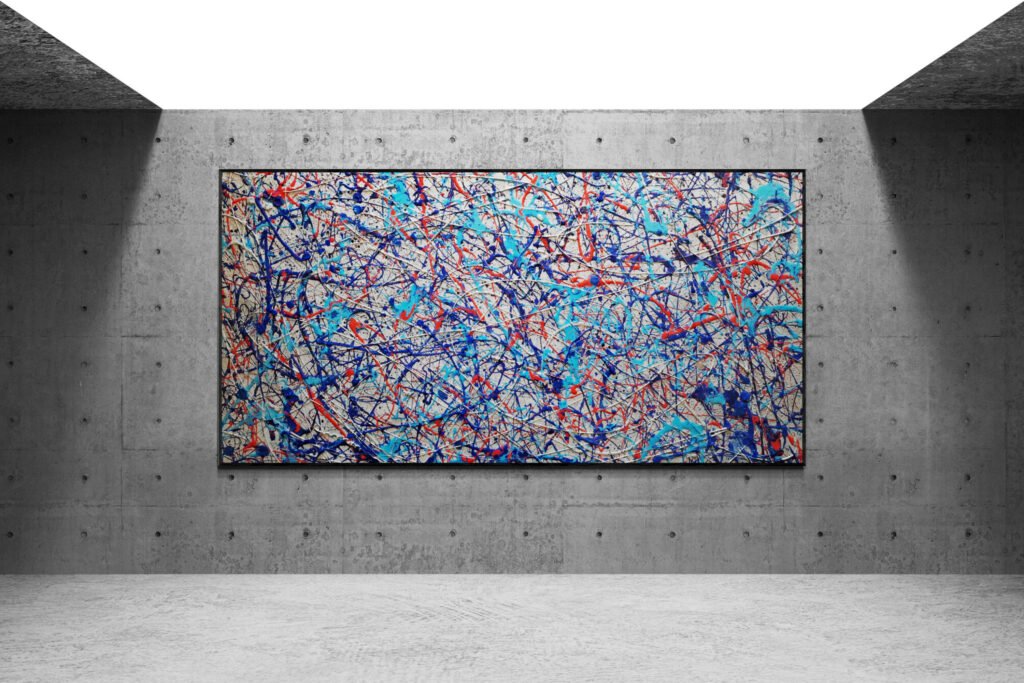
One of the most common mistakes in home decoration is hanging artwork too high. Even a beautiful painting can look disconnected from the room if it is placed at the wrong height. The good news is that there are a few simple guidelines that will help you get it right almost every time.
In this guide, we’ll explain how to choose the right height for your artwork based on eye level, furniture and wall proportions.
The Eye-Level Rule: The Golden Standard
In galleries and museums, artworks are usually hung so that the center of the piece is at eye level. For most interiors, this means:
The center of the artwork should be around 145–155 cm from the floor.
This height works well in most homes and creates a natural, comfortable viewing experience.
What If the Painting Is Above a Sofa or Sideboard?
When artwork is placed above furniture, the relationship with that furniture becomes more important than the general eye-level rule.
As a guideline:
- The bottom of the painting should usually be 15–25 cm above the back of the sofa or the top of the sideboard.
- This keeps the artwork visually connected to the furniture instead of floating on the wall.
If you want to explore proportions above a sofa in more detail, you may find this guide useful: What Size Painting Works Best Above a Sofa?.
Hanging Art on Very Tall Walls or High Ceilings
High ceilings often tempt people to hang art higher than they should. In most cases, this is a mistake. Even in tall rooms, it is usually better to keep the artwork visually connected to human scale rather than trying to fill the entire wall.
Instead of moving the artwork up, consider:
- Choosing a larger format
- Using a vertical or oversized composition
- Creating a multi-piece composition
You can read more about decorating large walls here: How to Decorate a Large Wall with Art.
Hanging Art in Hallways, Stairs and Transitional Spaces
In corridors and staircases, the same eye-level principle applies, but measured from the walking line rather than from a fixed floor point.
The goal is always the same: the center of the artwork should feel natural to the viewer’s eye as they move through the space.
What About Groups of Paintings or Multi-Piece Compositions?
When hanging a diptych, triptych or a group of artworks, you should treat the whole composition as one single visual block.
That means:
- Measure the total height of the entire composition
- Place the center of that block at eye level (or relative to the furniture below)
If you’re deciding between a triptych or a single large piece, this guide may help: Triptych vs Single Large Painting: What Works Better?.
Common Mistakes to Avoid
- Hanging artwork too high
- Centering the top of the painting instead of the center
- Ignoring the relationship with furniture
- Trying to fill vertical space instead of respecting human scale
Final Considerations
The right hanging height makes artwork feel calm, intentional and integrated into the room. In most cases, keeping the center of the piece around eye level—or visually connected to the furniture below—will give you the best result.
If you’re working with large or complex walls, you can explore large-scale and custom solutions in our Projects section.
You may also find this guide useful: How to Choose the Right Art Size for Your Living Room Wall.